The stronger will always rule, say some, with an air of confidence which is like a lawyer's flourish, forbidding exceptions or additions. But what is strength? Is it blind wilfulness that sees no terrors, no many-linked consequences, no bruises and wounds of those whose cords it tightens? Is it the narrowness of a brain that conceives no needs differing from its own, and looks to no results beyond the bargains of to-day; that tugs with emphasis for every small purpose, and thinks it weakness to exercise the sublime power of resolved renunciation? There is a sort of subjection which is the peculiar heritage of largeness and of love; and strength is often only another name for willing bondage to irremediable weakness.From Felix Holt: The Radical chapter 6
Showing posts with label literature. Show all posts
Showing posts with label literature. Show all posts
Friday, February 03, 2017
Felix Holt quote from chapter 6
George Eliot strikes again (does she know people or does she know people!):

Friday, January 27, 2017
Felix Holt quote from Chapter 27
More quotes from George Eliot's Felix Holt: The Radical (Felix himself speaking, of course)
"I have to determine for myself, and not for other men. I don't blame them, or think I am better than they; their circumstances are different. I would never choose to withdraw myself from the labour and common burthen of the world; but I do choose to withdraw myself from the push and scramble for money and position. Any man is at liberty to call me a fool, and say that mankind are benefited by the push and the scramble in the long-run. But I care for the people who live now and will not be living when the long-run comes. As it is, I prefer going shares with the unlucky."and:
"I'm determined never to go about making my face simpering or solemn, and telling professional lies for profit; or to get tangled in affairs where I must wink at dishonesty and pocket the proceeds, and justify the knavery as part of a system I can't alter. If I once went into that sort of struggle for success, I should want to win -- I should defend the wrong that I had once identified myself with. I should become everything that I see beforehand to be detestable. I should do this, as men are doing it every day, for the ridiculously small prize -- perhaps for none at all -- perhaps for the sake of two parlours, a rank eligible for churchwardenship, a discontented wife and several unhopeful children."
Monday, January 02, 2017
Felix Holt quote from Chapter 1
"The mother's love is at first an absorbing delight, blunting all other sensibilities; it is an expansion of the animal existence; it enlarges the imagined range for self to move in: but in after years it can only continue to be joy on the same terms as other long-lived love -- that is, by much suppression of self, and power of living in the experience of another." - George Eliot from Felix Holt: The Radical Chapter 1
Tuesday, June 09, 2015
An old argument against universal literacy
Obviously this opinion is not held by the author (or myself) but I enjoy this ancient furze-cutter's reasoning:
'Ah, there's too much of that sending to school these days! It only does harm. Every gatepost and barn's door you come to is sure to have some bad word or other chalked upon it by the young rascals: a woman can hardly pass for shame sometimes. If they'd never been taught how to write they wouldn't have been able to scribble such villainy. Their fathers couldn't do it, and the country was all the better for it.' Extracted from Thomas Hardy's The Return of the Native (from the first chapter of Book Second)
Monday, September 15, 2014
Dorrit's Duty
To sightly misquote Lizzie Bennet: "the more I see of Patriarchy the more I am dissatisfied with it". Well, that is not entirely true. I was raised within the system and knew it from the inside quite well but I suppose the more perspective I have acquired on it, the more I have seen its menacing aspects. I cannot pin down the specific moment or book or talk when this shift could be said to have started (to return to Miss Bennet "It's been coming on so gradually I hardly know") but looking back now it's interesting to see just how far my opinion has changed in the past decade. As much as I am happy to have a more mature outlook on the world an unexpected result of this perspective is that I am finding it harder to love my Victorian novels as unreservedly (at least, somehow, ones written by male authors).
 For instance, the latest Dickens I have read is Little Dorrit. [Before I begin discussing it let me say that a few months and quite a few books have passed since I read it so I apologize if any of the details or my recollections are slightly off.] I have always enjoyed Dickens for a number of reasons and was looking forward to opening one I hadn't had a chance to read previously. Of all Dickens Little Dorrit would seem to stray quite far from male-centricity; the titular heroine (a female protagonist!) is shown to be strong, virtuous, faithful, and unchanging for richer for poorer, through sickness and health, before she is rewarded by marriage (even being more fortunate in this than the eminently suitable because divinely beautiful other woman) to her faithful friend who has also been shown to be virtuous and deserving in a manly way (having worked through the outcomes of a few mistakes in judgement to show some nuanced growth). This seems to work to invert the usual virtuous hero being rewarded with marriage plot. It even supplies a contrast with showing the misery possible (even for one so virtuous as to be beautiful) from marrying merely from love and good looks. But we sometimes find that a large aspect of Little Dorrit's virtues (and, it would seem, the driving factor of her entire existence through most of the book) is that she is loyal to her father through thick and thin (yes, a good thing) and does everything she can to soften the world around him and cater to all his varying whims whether they may be noble or ignoble. I do agree this is a marvelous display of filial duty and suppression of self but would any of that be asked of or praised in a son? In fact, the main male protagonist detaches himself from his mother (with whom he had business ties, if not much love) because he suspects her of bad business dealings (their relationship turns out to be more complicated than this but only by the very end). I realize the male and female roles were much more delineated but surely even then virtue is virtue? Or, for a woman, does the system expect a little more of blind loyalty or obedience to one's master than to one's sense of right?
 There are other instances in the book that are too complicated to explain here that also add to this uneasy feeling that seems to be growing as I read books of that era written by men. Either way I dove into a few flapper-era books about strong women as a bit of an antidote directly after finishing Dorrit and it seems to be helping. However it's still a bit of a struggle to feel the loss of my full enjoyment of a decent section of literature with the consolation that it comes from being older and wiser.
 For instance, the latest Dickens I have read is Little Dorrit. [Before I begin discussing it let me say that a few months and quite a few books have passed since I read it so I apologize if any of the details or my recollections are slightly off.] I have always enjoyed Dickens for a number of reasons and was looking forward to opening one I hadn't had a chance to read previously. Of all Dickens Little Dorrit would seem to stray quite far from male-centricity; the titular heroine (a female protagonist!) is shown to be strong, virtuous, faithful, and unchanging for richer for poorer, through sickness and health, before she is rewarded by marriage (even being more fortunate in this than the eminently suitable because divinely beautiful other woman) to her faithful friend who has also been shown to be virtuous and deserving in a manly way (having worked through the outcomes of a few mistakes in judgement to show some nuanced growth). This seems to work to invert the usual virtuous hero being rewarded with marriage plot. It even supplies a contrast with showing the misery possible (even for one so virtuous as to be beautiful) from marrying merely from love and good looks. But we sometimes find that a large aspect of Little Dorrit's virtues (and, it would seem, the driving factor of her entire existence through most of the book) is that she is loyal to her father through thick and thin (yes, a good thing) and does everything she can to soften the world around him and cater to all his varying whims whether they may be noble or ignoble. I do agree this is a marvelous display of filial duty and suppression of self but would any of that be asked of or praised in a son? In fact, the main male protagonist detaches himself from his mother (with whom he had business ties, if not much love) because he suspects her of bad business dealings (their relationship turns out to be more complicated than this but only by the very end). I realize the male and female roles were much more delineated but surely even then virtue is virtue? Or, for a woman, does the system expect a little more of blind loyalty or obedience to one's master than to one's sense of right?
 There are other instances in the book that are too complicated to explain here that also add to this uneasy feeling that seems to be growing as I read books of that era written by men. Either way I dove into a few flapper-era books about strong women as a bit of an antidote directly after finishing Dorrit and it seems to be helping. However it's still a bit of a struggle to feel the loss of my full enjoyment of a decent section of literature with the consolation that it comes from being older and wiser.
Thursday, April 17, 2014
Anne Fadiman through the tulips
 I recently borrowed Anne Fadiman's Ex Libris: Confessions of a Common Reader from a friend and thoroughly enjoyed it. I have lifted a few excerpts and placed them here the better to remember it by. I am sorry for the lack of context which would add even more richness to many of the quotes but will have only to recommend that you find and read the book in its entirety. I have entwined the quotes with pictures of last year's tulips because flowers and renewal cannot come soon enough to the darkness of this tired and dirty world.
 "After five years of marriage and a child, George and I finally resolved that we were ready for the more profound intimacy of library consolidation."
 "Americans admire success. Englishmen admire heroic failure."
 "My sonnets looked like poems. They quacked like poems. But at seventeen, when I got to college and my critical faculties suddenly kicked in, I had to admit that they weren't really poems. I had mistaken for lyric genius what was in fact merely the genetic facility for verbal problem-solving that enabled everyone in my family to excel at crossword puzzles, anagrams, and Scrabble."
 "During the next thirty years I came to realize that just as there is more than one way to love a person, so is there more than one way to love a book."
 "To us, a book's words were holy, but the paper, cloth, cardboard, glue, thread, and ink that contained them were a mere vessel, and it was no sacrilege to treat them as wantonly as desire and pragmatism dictated. Hard use was a sign not of disrespect but of intimacy."
 "On the sanguinary fields of gender politics, Ms. has scored a clear victory. I wish I could say the same of, say, the United Church of Christ's new 'inclusive' hymnal, in which "Dear Lord and Father of Mankind" has been replaced by "Dear God, Embracing Humankind." The end is estimable; it's the means that chafe. I'm not sure I want to be embraced by an Almighty with so little feeling for poetry. Yet, having heard the new version, I can't say I feel entirely happy with the old one either. As is all too often the case these days, I find my peace as a reader and writer rent by a war between two opposing semantic selves, one feminist and one reactionary."
 "I believe that although my father and E. B. White were not misogynists, they didn't really see women, and their language reflected and reinforced that blind spot."
 "What I am saying here is very simple: Changing our language to make men and women equal has a cost. That doesn't mean it shouldn't be done. High prices are attached to many things that are on the whole worth doing. It does mean that the loss of our heedless grace should be mourned, and then accepted with all the civility we can muster, by every writer worth his'er salt."
 "Our father, who often boasted that he had never actually done anything except think, was still the same person he had been when he started collecting books in the early 1920s. He and his library had never diverged. Our mother, on the other hand, had once led a life of action. And why had she stopped? Because she had had children. Her books, which seemed the property of a woman I had never met, defined the size of the sacrifice my brother and I had exacted."
 "Other people's walls looked naked to me. Ours weren't flat white backdrops for pictures. They were works of art themselves, floor-to-ceiling mosaics whose vividly pigmented tiles were all tall skinny rectangles, pleasant to the touch and even, if one liked the dusty fragrance of old paper, to the sniff."
 "Now you know why I married my husband. In my view, nineteen pounds of old books are at least nineteen times as delicious as one pound of fresh caviar."
 "In a secondhand bookstore, each volume is one-of-a-kind, neither replaceable from a publisher's warehouse nor visually identical to its original siblings, which have accreted individuality with every change of ownership. If I don't buy the book now, I may never have another chance. And therefore, like Beecher, who believed the temptations of drink were paltry compared with the temptations of books, I am weak."
 " "It was only when I saw his bookshelves--James Bond paperbacks cheek by jowl with nineteenth-century parliamentary proceedings--that I got a sense of who Clive really was. His intellectual furnishings explained him in a way his lectures hadn't.
 "Dispersing his library was like cremating a body and scattering it to the winds. I felt sad. And I realized that books get their value from the way the coexist with the other books a person owns, and that when they lose their context, the lose their meaning." "

Wednesday, October 17, 2012
Fictional musings
I have been doing a bit of editing this past while (and loving it) and have been asked by several different people if I intend on writing anything myself at any time soon. This is a question that I have struggled with on and off ever since starting my University career. Before that time I would write little dribbles of stories and had several more ideas brewing at all times. But then all that was cut off partially by being busy developing actual writing skills (although I never took part in a creative writing workshop so just dealing with the mechanics of writing) and partially by seeing what good writing truly looks like from the inside. I realize now that what I liked to compose during my highschool days were really just written-out daydreams. Not that there is anything wrong with that, I've just passed by the stage in which I want to imagine my life being lived out in a multitude of other ways. What it all comes down to is that I have very little inspiration left.
 So now I generally fill any creative writing desire (along with satisfactions of other kinds) with the type of editing I have been doing recently - working with an author to improve a text. But unexpectedly, having been asked to write a review of the text as a whole I found myself plunged into the musings of what writing is all about. The whole process (to a certain extent) came back at me and I found myself asking myself the same questions I have been asked as to why I haven't been writing more.
 At just this point in time I was loaned a book written by Fay Weldon called Letters to Alice, on first reading Jane Austen in which Fay writes to a (fictional) niece who is an aspiring writer. The book is a blend of a lovely critique of Austen and of sage, and occasionally off-beat, advice on what it is like to be a writer. This book came to me at the exact time when what she had to say fit perfectly both with what I was hoping to articulate in my review and with what I needed to hear personally.
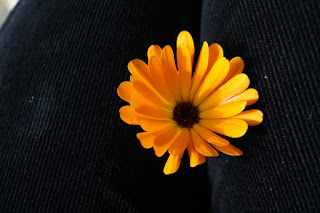 I still do not know if I shall ever take up my pen to attempt to compose literature (I find that Fay expressed my position better than I could with the simple phrase: "the paralysis of the over-literate") but I now have the urge to work on that side of my creativity more so it's a start. And I have plans on sharing some of my favourite quotes from the book here in the near future so it will not all be in vain in any case. I shall leave you at this point with one of the quotes that should give me a certain amount of comfort: "Fiction is much safer than non-fiction. You can be accused of being boring, but seldom of being wrong."


Monday, August 29, 2011
Recent reading
I may have mentioned this before but during my degree I made myself a rule only to read books on the course lists (after all, they're exactly the books I wanted to read in any case so it wasn't a difficult rule for the most part). Having emerged from both my BA and my MA I now have no rules as to reading lists so have been following whims and suggestions. I also have the desire to fill in some of the blanks and read some more of the 'classic' books one would expect to have an acquaintance and an opinion about having fallen out the other side of an English degree. So recently I have read (among others I may not remember at this moment): Eliot's Daniel Deronda, Bronte's Wuthering Heights, Gaskell's Wives and Daughters, and James' Portrait of a Lady. Even having just read them I find this list quite attractive. Now I'm reading some essays about Daniel Deronda and Portrait of a Lady. It feels good to be back in the swing of literary studies especially with September just around the corner. I'll have a few years off from the imposition of the school year but I don't think I'll be able to break the habit of feeling studious at the arrival of the first chill in the air.
Saturday, July 16, 2011
Writer's Block
I love fiction and have always been puzzled with my evident lack of talent in producing it. I think it is common with writers to find it difficult to get past the initial problem of beginning. But having spent at least six years honing my writing skills (mainly through essays) I don't think that or any other technical aspect of writing is the problem. Style and technique are things that with discipline and practice become less difficult. I also have very little problem stringing together sentences; I tend to be verbose more than otherwise.
It struck me today, however, that a deeper problem for me is that to create one particular character, for instance, is to exclude all other possibilities for that character. Descriptions essentially limit possibility. I enjoy reading of other peoples' created worlds because it opens new worlds to the imagination but to create one myself is to exclude all other possibilities. So I suppose my being a reader who cannot herself write is in a way rather a selfish position.
Maybe knowing this will help me overcome my writer's block. I guess we'll see!
It struck me today, however, that a deeper problem for me is that to create one particular character, for instance, is to exclude all other possibilities for that character. Descriptions essentially limit possibility. I enjoy reading of other peoples' created worlds because it opens new worlds to the imagination but to create one myself is to exclude all other possibilities. So I suppose my being a reader who cannot herself write is in a way rather a selfish position.
Maybe knowing this will help me overcome my writer's block. I guess we'll see!
Tuesday, June 09, 2009
Confessions
When I finished reading James Hogg's Confessions of a Justified Sinner I decided that I should read Thomas De Quincey's Confessions of an English Opium Eater to follow a bit of a theme and perhaps compare the two (a friend suggested that I should perhaps read the shopaholic confessions also but we'll see about that). Of course there are differences: De Quincey's confessions are autobiographical while Hogg's twist from one narration of supernatural events to another also De Quincey seeks to explain how he turned to the wrong while the protagonist (if he may be called that) in Hogg's book will at no time admit himself to be anything but righteous. In fact it may turn out to be easier to list similarities than differences between these two books.
What I found and find most difficult within the reading process itself about these two books is their lack of chapters or chapter-like divisions within the texts. The Justified Sinner has breaks at each new narrative but they are far enough apart that it gives no real sense of being able to stop at a good point, while the writing and subject matter do not hold up well to prolonged reading sessions (unless one wishes to get it over quickly).
I have read almost through half of the Opium Eater and have just stopped at a small break--the only one of which I can remember having encountered. But beyond this annoyance, I have been enjoying De Quincey's narrative immensely. It seems at times more a collection of essays centred around and inspired by a life's narrative than a biography. At this point, however, I am thoroughly satisfied with it. I have come thus far and he has eaten not a drop of opium yet so perhaps the book takes a turn to the gloomy side soon.
He originally wrote his Confessions in 1821 and subsequently, by 1856, published a revised version. I am reading the revised version and have been interested by the several remarks he inserts on the subject of his revisions and his various statements on the nature of narrative and truth. He uses footnotes extensively (sometimes a footnote will take up almost an entire page itself) and although they can distract from the central narrative, I have never really found them to detract from it. His style, as I mentioned when speaking of the collection of essays, is disjointed at most times so I sometimes question if there is a purpose to putting some of the asides into footnote form while leaving others in the text itself. It would be interesting to look into further. I also would like to read the original and compare the two because he speaks of how he has changed some things, put some thing in that weren't there previously and so on. It has been a fascinating read so far and I shall try to write more on it if other thoughts worthy of recording come up while reading the rest of the book.
I found I have written little about Hogg's book but that might be because I have read several other books in the intervening time and it is not fresh in my memory. Also I have already had the privilege of discussing it because it was read as part of a book club so I don't feel the need to get my thoughts on it out at this point. In any case I can still outline briefly the things that I found I liked about it. I found the aspects I found most interesting in reading Justified Sinner also had to do with its conscious production of the crafting of the narrative. I am interested in the way that there were so many stories and frame stories and various points of view within the book and I would like to puzzle a bit more over why the author employed this means of telling the story. Also I found it quite interesting that the author placed himself (or a version of himself) in a limited and a discounted role within the story.
Anyway I was not put off from my Calvanistic and Scottish tendencies and heritage by the reading of an account of how such things can go too far (into the realm of antinomianism and perhaps even beyond...) but I shall take it as a warning and call to seek to live a balanced life. That may be one of the hardest things we are called to do in this life but we must try for it nonetheless.
I did not get much enjoyment from the reading of the text, however, and found most of the time that I was reading merely to finish it but I am happy that I have read it and come to the point where I can focus on certain aspects of it while not having to have the less-savoury bits still on my tongue.
What I found and find most difficult within the reading process itself about these two books is their lack of chapters or chapter-like divisions within the texts. The Justified Sinner has breaks at each new narrative but they are far enough apart that it gives no real sense of being able to stop at a good point, while the writing and subject matter do not hold up well to prolonged reading sessions (unless one wishes to get it over quickly).
I have read almost through half of the Opium Eater and have just stopped at a small break--the only one of which I can remember having encountered. But beyond this annoyance, I have been enjoying De Quincey's narrative immensely. It seems at times more a collection of essays centred around and inspired by a life's narrative than a biography. At this point, however, I am thoroughly satisfied with it. I have come thus far and he has eaten not a drop of opium yet so perhaps the book takes a turn to the gloomy side soon.
He originally wrote his Confessions in 1821 and subsequently, by 1856, published a revised version. I am reading the revised version and have been interested by the several remarks he inserts on the subject of his revisions and his various statements on the nature of narrative and truth. He uses footnotes extensively (sometimes a footnote will take up almost an entire page itself) and although they can distract from the central narrative, I have never really found them to detract from it. His style, as I mentioned when speaking of the collection of essays, is disjointed at most times so I sometimes question if there is a purpose to putting some of the asides into footnote form while leaving others in the text itself. It would be interesting to look into further. I also would like to read the original and compare the two because he speaks of how he has changed some things, put some thing in that weren't there previously and so on. It has been a fascinating read so far and I shall try to write more on it if other thoughts worthy of recording come up while reading the rest of the book.
I found I have written little about Hogg's book but that might be because I have read several other books in the intervening time and it is not fresh in my memory. Also I have already had the privilege of discussing it because it was read as part of a book club so I don't feel the need to get my thoughts on it out at this point. In any case I can still outline briefly the things that I found I liked about it. I found the aspects I found most interesting in reading Justified Sinner also had to do with its conscious production of the crafting of the narrative. I am interested in the way that there were so many stories and frame stories and various points of view within the book and I would like to puzzle a bit more over why the author employed this means of telling the story. Also I found it quite interesting that the author placed himself (or a version of himself) in a limited and a discounted role within the story.
Anyway I was not put off from my Calvanistic and Scottish tendencies and heritage by the reading of an account of how such things can go too far (into the realm of antinomianism and perhaps even beyond...) but I shall take it as a warning and call to seek to live a balanced life. That may be one of the hardest things we are called to do in this life but we must try for it nonetheless.
I did not get much enjoyment from the reading of the text, however, and found most of the time that I was reading merely to finish it but I am happy that I have read it and come to the point where I can focus on certain aspects of it while not having to have the less-savoury bits still on my tongue.
Saturday, December 13, 2008
Once more unto the quotes, dear friends...
I realize that I have been behindhand in writing out some of the quotes that I have been gleaning from books and because I am also slightly behindhand in the gleanings I feel a remedy of one might help the other. I have finished re-reading Emma and part of the time I had my quote/note book (I would combine the two words but am prevented by the difficulty stemming from their similarity) with me and so gleaned a few felicitous quotes. I love Austen's style and, although many of her turns of phrase are only seen perfectly when viewed in full context of the plot and what has gone before, I did manage to find some quotes that are quite as good when lifted from the pages and set by themselves.
Having been attending, for the past few months, country dances in my small town, I am finding that I understand and have experienced many of the feelings described as surrounding such events in Austen's work. I believe that I may have posted something further on this topic earlier so I will suffice it to say that now that I am in the habit of attending these dances I gladly put myself in the place of the young people mentioned in this quote:
Being, as I am, interested in linguistics, grammar, and also the imagination, I laughed at the following quote:
Finally a quick quote that mirrors what I often experience:
And there you have three lovely quotes from one of my favourite authors.
Having been attending, for the past few months, country dances in my small town, I am finding that I understand and have experienced many of the feelings described as surrounding such events in Austen's work. I believe that I may have posted something further on this topic earlier so I will suffice it to say that now that I am in the habit of attending these dances I gladly put myself in the place of the young people mentioned in this quote:
It may be possible to do without dancing entirely. Instances have been known of young people passing many, many months successively, without being at a ball of any description, and no material injury accrue either to body or mind; - but when a beginning is made - when felicities of rapid motion have once been, though slightly, felt - it must be a very heavy set that does not ask for more.
Being, as I am, interested in linguistics, grammar, and also the imagination, I laughed at the following quote:
Such an adventure as this, - a fine young man and a lovely young woman thrown together in such a way, could hardly fail of suggesting certain ideas to the coldest heart and the steadiest brain. So Emma thought, at least. Could a linguist, could a grammarian, could even a mathematician have seen what she did, have witnessed their appearance together, and heard their history of it, without feeling that circumstances had been at work to make them peculiarly interesting to each other? - How much more must an imaginist, like herself, be on fire with speculation and foresight!
Finally a quick quote that mirrors what I often experience:
Emma denied none of it aloud, and agreed to none of it in private.I know this is not a good thing but there you have it.
And there you have three lovely quotes from one of my favourite authors.
Oh, I'm just booking
One of the aspects that I have enjoyed most about this section of my life is the oodles of time I now have to dedicate to reading and discussing books. Any books that I want. Books that I have been meaning to read for ages. Books that I have been acquiring at an astonishing rate at used book sales and the like. This is indeed a recipe for true bliss. The one problem, the fly in the ointment as it were, I am now facing is that my desire to read books has outstripped the time it actually takes to read them. As I am reading (or contemplating reading) one, another pops into my head as a great one to read next and I'm off again. If I read several at the same time I don't feel as though I'm getting through any of them fast enough (and often the less-interesting at the time fall by the wayside and never get read when perhaps I would otherwise have been interested at a later date). But if I read one at a time I feel as though I would find it too narrow to accommodate my ever-changing tastes. So instead of savouring whatever it is I am free to read at the time I spend energy looking forward to what I will be able to read next.
But, to state the obvious, this is a wrong view to take. The goal is not to rush through as many books as possible merely to be able to check them off the list. That I do believe in this viewpoint is evident from the fact that I enjoy re-reading a good book, even sometimes on multiple occasions. I know I should take the time to taste each book as I'm chewing them. I would ideally like to remember enough about any book I've read to be able to discuss it reasonably well with other readers (my poor memory for details often gets in the way of this but I do believe it is something that should be worked on and not merely used as an excuse for lack of intelligence). I do know that there are too many books out there to read within a lifetime. Skipping from one to the next is not the way to garner any enjoyment from them either. It's strange because I generally already have this outlook on most aspects of my life. I realize that I am not able to take every career path of which I can think. I realize that there are pros and cons to everything; things that I would like and dislike in every possible situation and that the best way to go through life is to enjoy whichever situation one finds oneself in at the time. But why is it so hard for me to find a similar contentment with books?
Perhaps this book-ADD stems from the very fact that I have a new-found freedom to read anything. When I was younger I was limited first by age/comprehension, then by resources (I had completely sucked dry the content--this word obviously excludes the multiple trashy series fobbed off on kids--of the children's section of our local library by the time I was twelve), and time (working almost full-time while in High School), and finally at the time when I entered the English program I made a pact with myself that during the school year I would only read assigned books. This is one of the first opportunities where none of these limitations apply and I haven't found another way to narrow down what I am reading. I'm not sure that I want to place limitations but I do wish to start enjoying and remembering whatever book I do happen to have in hand at any particular moment. In general I have a decent attention span, I just need to find it in this aspect of my life.
But, to state the obvious, this is a wrong view to take. The goal is not to rush through as many books as possible merely to be able to check them off the list. That I do believe in this viewpoint is evident from the fact that I enjoy re-reading a good book, even sometimes on multiple occasions. I know I should take the time to taste each book as I'm chewing them. I would ideally like to remember enough about any book I've read to be able to discuss it reasonably well with other readers (my poor memory for details often gets in the way of this but I do believe it is something that should be worked on and not merely used as an excuse for lack of intelligence). I do know that there are too many books out there to read within a lifetime. Skipping from one to the next is not the way to garner any enjoyment from them either. It's strange because I generally already have this outlook on most aspects of my life. I realize that I am not able to take every career path of which I can think. I realize that there are pros and cons to everything; things that I would like and dislike in every possible situation and that the best way to go through life is to enjoy whichever situation one finds oneself in at the time. But why is it so hard for me to find a similar contentment with books?
Perhaps this book-ADD stems from the very fact that I have a new-found freedom to read anything. When I was younger I was limited first by age/comprehension, then by resources (I had completely sucked dry the content--this word obviously excludes the multiple trashy series fobbed off on kids--of the children's section of our local library by the time I was twelve), and time (working almost full-time while in High School), and finally at the time when I entered the English program I made a pact with myself that during the school year I would only read assigned books. This is one of the first opportunities where none of these limitations apply and I haven't found another way to narrow down what I am reading. I'm not sure that I want to place limitations but I do wish to start enjoying and remembering whatever book I do happen to have in hand at any particular moment. In general I have a decent attention span, I just need to find it in this aspect of my life.
Friday, August 29, 2008
bleak reading
I, in general, love Dickens' books. I havn't read them all yet but am slowly working through the ones still unread whenever I have an extended amount of free time to fill. Bleak House has been near the end of this list; I've had it for quite some time but its title seemed less promising of a delightful read than others (such as Dombey and Son). Its position on the list moved, however, when I found that I now have access to a mini series on the book. I love mini-series in general but I also generally wish to read the book before venturing into movie-land. I therefore resolved to read Bleak House next. Leaving shortly after forming this resolve on a trip involving various flights and other opportunities to read while waiting for something, it was a simple decision to bring this book with me. I have now read halfway through the book and must say that I am really enjoying it. It seems a little more mature than some other Dickens I have known. So far (one must make this reservation when reading Dickens) it is not really bleak at all. There have been several episodes within the story that have been less than happy but this is what gives it the feeling of being true to life. I am happy that it was bumped to the top of the list and am looking forward to finishing it and watching the miniseries.
Tuesday, July 29, 2008
literary questions
I have often wished to write reviews on here of books I have read or, barring that, even a quick comment on broad impressions in response to books I have been thinking about. What generally stops me in this is a feeling that I do not want to judge a book before I have completed it and perhaps chewed over its contents for a while. So while I am reading a book I try to reserve judgement and by the time that such judgement ideally would be ripe I am deep into the next book with all thoughts of the previous one as dim memories of syne.
I do wish to work around this tendency and not just post some interesting quotes but to engage with the material and themes and express my true opinion (something that I often have a hard time getting out). To start with baby steps I shall in this post answer a couple questions I found elsewhere concerning books. Perhaps the resulting discussion will prompt and prod me into a resolve to continue discussions of the like on a deeper level.
What kind of book are you most comfortable reading?
Novels. In particular the huge Victorian tomes that frighten so many people away. I would say that for recreation and ease of reading there are always lighter novels comparable to candy that are a joy to escape into occasionally but would not sustain a steady diet. I love the complex and beautiful writing and insights into human nature that generally abound in a good novel.
What kind of book do you love to hate?
I generally despise the cheap historical fiction books that frame modern anxieties with a show of historic accuracy. I understand that all historic fiction draws attitudes from modern thought. This is understandable because we are all a product of our own time but there should be some connection between the event shown in the book and the central thrust of the book. If the anxiety is social unrest, then to place the plot in a time of riots and such makes sense but merely to use a certain time-period to display the depths of one's research into that time is rather shallow.
In a slightly different vein, this is not about a book in particular but I look down on the modern trend to appear deep by being obscure.
What was the last book that you surprised yourself by liking?
I think it would have to be Elizabeth B B's Aurora Leigh. I thought a novel written in verse would combine the worst aspects of both genres yet it seemed to do the opposite. Some parts did tend to drag on but for the most part I thoroughly enjoyed it.
What was the last book that you surprised yourself by disliking?
I can't think of the last book that I thought I would like that I haven't liked. I'll have to think of this a little more. Actually I was surprised that I did not enjoy Gaskell's Cranford as I had anticipated. I still ended with enjoying it but it took me more than my usual effort to stay with it and complete it. Once finished, however, I look back with fondness on the book and hope that those who are thinking of reading it will also stick with it and find the small treasures hidden within its pages.
What book would you take with you if you knew you would be marooned in the near future?
Well the Bible is a necessity but as I suspect they are referring to entertainment reading I think I would pick something along the lines of all of Austen's work in one volume. I don't think that's cheating since they are often bound together and it is not an overly unwieldy tome. Perhaps if the three volumes of Tolkein's Ring cycle were together that might suffice also but I don't remember having seen them in one volume before.
What forces you to read outside your comfort zone?
Being in an English degree leaves one at the mercy of required courses and assigned reading. Just having graduated I am now looking forward to a life of ever-narrowing scope and opinions. I can't wait!
In seriousness, however, I often look to friends who may have different likes/dislikes than myself to recommend their favourite books. I do enjoy finding merit in books that I would not have considered myself.
And so ends the short quiz. I enjoyed thinking about the answers and I hope that you enjoyed reading them and that they made you think about what your answers would be. I'm feeling stimulated towards further and deeper discussions over literature so hopefully that will transpire in time.
I do wish to work around this tendency and not just post some interesting quotes but to engage with the material and themes and express my true opinion (something that I often have a hard time getting out). To start with baby steps I shall in this post answer a couple questions I found elsewhere concerning books. Perhaps the resulting discussion will prompt and prod me into a resolve to continue discussions of the like on a deeper level.
What kind of book are you most comfortable reading?
Novels. In particular the huge Victorian tomes that frighten so many people away. I would say that for recreation and ease of reading there are always lighter novels comparable to candy that are a joy to escape into occasionally but would not sustain a steady diet. I love the complex and beautiful writing and insights into human nature that generally abound in a good novel.
What kind of book do you love to hate?
I generally despise the cheap historical fiction books that frame modern anxieties with a show of historic accuracy. I understand that all historic fiction draws attitudes from modern thought. This is understandable because we are all a product of our own time but there should be some connection between the event shown in the book and the central thrust of the book. If the anxiety is social unrest, then to place the plot in a time of riots and such makes sense but merely to use a certain time-period to display the depths of one's research into that time is rather shallow.
In a slightly different vein, this is not about a book in particular but I look down on the modern trend to appear deep by being obscure.
What was the last book that you surprised yourself by liking?
I think it would have to be Elizabeth B B's Aurora Leigh. I thought a novel written in verse would combine the worst aspects of both genres yet it seemed to do the opposite. Some parts did tend to drag on but for the most part I thoroughly enjoyed it.
What was the last book that you surprised yourself by disliking?
I can't think of the last book that I thought I would like that I haven't liked. I'll have to think of this a little more. Actually I was surprised that I did not enjoy Gaskell's Cranford as I had anticipated. I still ended with enjoying it but it took me more than my usual effort to stay with it and complete it. Once finished, however, I look back with fondness on the book and hope that those who are thinking of reading it will also stick with it and find the small treasures hidden within its pages.
What book would you take with you if you knew you would be marooned in the near future?
Well the Bible is a necessity but as I suspect they are referring to entertainment reading I think I would pick something along the lines of all of Austen's work in one volume. I don't think that's cheating since they are often bound together and it is not an overly unwieldy tome. Perhaps if the three volumes of Tolkein's Ring cycle were together that might suffice also but I don't remember having seen them in one volume before.
What forces you to read outside your comfort zone?
Being in an English degree leaves one at the mercy of required courses and assigned reading. Just having graduated I am now looking forward to a life of ever-narrowing scope and opinions. I can't wait!
In seriousness, however, I often look to friends who may have different likes/dislikes than myself to recommend their favourite books. I do enjoy finding merit in books that I would not have considered myself.
And so ends the short quiz. I enjoyed thinking about the answers and I hope that you enjoyed reading them and that they made you think about what your answers would be. I'm feeling stimulated towards further and deeper discussions over literature so hopefully that will transpire in time.
Monday, March 10, 2008
the cherubic chaffinch
I have waited to post some of my favourite quotes from Aurora Leigh in hopes that I would have time to connect some of my thoughts around them and perhaps glean quotes from elsewhere that support and further illuminate the topic but I have come to the conclusion that it is perhpas better to write out the quotes within the amount of time I have now then not at all. If I have more time later I may come back and deal with them more thoroughly but this shall have to suffice for now.
-E.B.B.'s Aurora Leigh Book 7, lines 800-828
The bird's not moved, that pecks at a spring-shoot;
Nor yet the horse, before a quarry a-graze:
But man, the two-fold creature, apprehends
The two-fold manner, in and outwardly,
And nothing in the world comes single to him,
A mere itself, - cup, column, or candlestick,
All patterns of what shall be in the Mount;
The whole temporal show related royally,
And built up to eternal significance
Through the open arms of God. 'There's nothing great
Nor small,' has said a poet of our day,
Whose voice will ring beyond the curfew of eve
And not be thrown out by the matin's bell:
And truly, I reiterate, nothing's small!
No lilly-muffled hum of a summer-bee,
But finds some coupling with the spinning stars;
No pebble at your foot, but proves a sphere;
No chaffinch, but implies the cherubim;
And, (glancing on my own thin, veined wrist,)
In such a little tremor of the blood
The whole strong clamour of a vehement soul
Doth utter itself distinct. Earth's crammed with heaven,
And every common bush afire with God;
But only he who sees, takes off his shoes,
The rest sit round it and pluck blackberries,
And daub their natural faces unaware
More and more from the first similitude.
Truth, so far, in my book! a truth which draws
From all things upward.
-E.B.B.'s Aurora Leigh Book 7, lines 800-828
Tuesday, February 05, 2008
On Reading
Or else I sate on in my chamber green,
And lived my life, and thought my thoughts, and prayed
My prayers without the vicar; read my books,
Without considering whether they were fit
To do me good. Mark, there. We get no good
By being ungenerous, even to a book,
And calculating profits, - so much help
By so much reading. It is rather when
We gloriously forget ourselves and plunge
Soul-forward, headlong, into a book's profound,
Impassioned for its beauty and salt of truth -
'Tis then we get the right good from a book.
-Elizabeth Barret Browning: Aurora Leigh 1.698-709
Monday, October 08, 2007
Quotes from Clinker
The book I was able to read part of over the weekend (while prevented from spending more time outdoors) is The Expedition of Humphrey Clinker by Tobias Smollett. I have been delighted by this book and start to realize that the reason I took on this English degree was so that I could read just such books as this. While reading it for other purposes, I was still able to glean a few quotes that I might as well share now (as I'll probably forget to if I wait).
I am finding this book a delightful read. Ah, English Literature. I guess I wasn't crazy after all.
In short, we live in a vile world of fraud and sophistication; so that I know nothing of equal value with the genuine friendship of a sensible man; a rare jewel! which I cannot help thinking myself in possession of, while I reapeat the old declaration, that I am, as usual, Dear Lewis, Your affectionate, M.B.Not only is this a great quote but also illustrates something that, from the moment of my first encounter with it, I have always wished to emulate: the way that he ends his letter by tying it into his closing addresses. Capital in the extreme!
The truth is, his disposition and mine, which, like oil and vinegar, repelled one another at first, have now begun to mix by dint of being beat up together.(This I merely inserted because I had been carrying on just such a conversation about the state of the school systems and how they ill-prepare their students with what they read and study when I had read this passage.)
He has read a great deal; but without method or judgement, and digested nothing.
He was scarce warm in the lodgings when he called for his nightcap, his wide shoes, and flannel; and declared himself invested with the gout in his right foot; though, I believe, it had as yet reached no farther than his imagination.
I am finding this book a delightful read. Ah, English Literature. I guess I wasn't crazy after all.
Monday, October 01, 2007
"Chaos contracted to intricate form"
The Crab Tree
Here is the crab tree,
Firm and erect,
In spite of the thin soil,
In spite of the neglect.
The twisted root grapples
For sap with the rock,
And draws the hard juice
To the succulent top:
Here are wild apples,
Here's a tart crop!
No outlandish grafting
That ever grew soft
In a sweet air of Persia,
Or safe Roman croft;
Unsheltered by steading,
Rock-rooted and grown,
A great tree of Erin,
It stands up alone,
A forest tree spreading
Where forests are gone.
Of all who pass by it
How few in it see
A Westering remnant
Of days when Lough Neagh
Flowed up the long dingles
Its blossoms had lit,
Old days of glory
Time cannot repeat;
And therefore it mingles
The bitter and sweet.
It takes from the West Wind
The thrust of the main;
It makes from the tension
Of sky and of plain
Of what clay enacted,
Of living alarm,
A vitalized symbol
Of earth and of storm,
Of Chaos contracted
To intricate form.
Unbreakable wrestler
What sapling or herb
Has core of such sweetness
And fruit so ascerb:
So grim a transmitter
Of life through mishap,
That one wonders whether
If that in the sap,
Is sweet or is bitter
Which makes it stand up.
-Oliver St. John Gogarty

Friday, September 14, 2007
commenting
Someone left the following poem as a comment on one of my post from way back in January. Since I thought it is worth reading, I decided to bring it to the attention of those of us who do not regularly check back in the archives.
Vanitas Vanitatum, Omnia Vanitas
(Anne Bronte, September 4, 1845)
In all we do, and hear, and see,
Is restless Toil, and Vanity.
While yet the rolling earth abides,
Men come and go like ocean tides;
And ere one generation dies,
Another in its place shall rise;
That, sinking soon into the grave,
Others succeed, like wave on wave;
And as they rise, they pass away.
The sun arises every day,
And hastening onward to the West,
He nightly sinks, but not to rest:
Returning to the eastern skies,
Again to light us, he must rise.
And still the restless wind comes forth,
Now blowing keenly from the North;
Now from the South, the East, the West,
For ever changing, ne'er at rest.
The fountains, gushing from the hills,
Supply the ever-running rills;
The thirsty rivers drink their store,
And bear it rolling to the shore,
But still the ocean craves for more.
'Tis endless labour everywhere!
Sound cannot satisfy the ear,
Light cannot fill the craving eye,
Nor riches half our wants supply;
Pleasure but doubles future pain,
And joy brings sorrow in her train;
Laughter is mad, and reckless mirth–
What does she in this weary earth?
Should Wealth, or Fame, our Life employ,
Death comes, our labour to destroy;
To snatch the untasted cup away,
For which we toiled so many a day.
What, then, remains for wretched man?
To use life's comforts while he can,
Enjoy the blessings Heaven bestows,
Assist his friends, forgive his foes;
Trust God, and keep his statutes still,
Upright and firm, through good and ill;
Thankful for all that God has given,
Fixing his firmest hopes on heaven;
Knowing that earthly joys decay,
But hoping through the darkest day.
Wednesday, September 05, 2007
on straightforwardness
a short quote from Anthony Trollope's fifth book in the Palliser series The Prime Minister
It could not be that he fancied Lady Rosina to be clever, nor can we imagine that her conversation satisfied any of those wants to which he and all of us are subject. But nevertheless he like Lady Rosina and was never bored by her. She was natural, and she wanted nothing from him. When she talked about cork soles she meant cork soles.
Subscribe to:
Posts (Atom)